
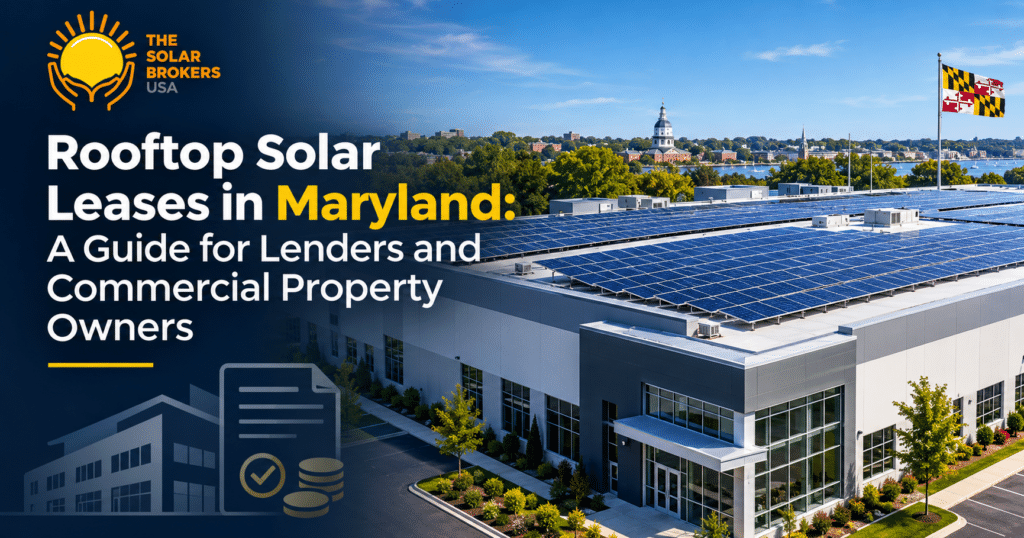
Real estate owners in Maryland are always looking for ways to increase property income and manage operating costs. Unused rooftop space can create opportunities to earn additional revenue through solar development. However, owners must understand how these agreements affect mortgages, refinancing, and future property sales.
Rooftop solar leases allow commercial property owners to lease roof space to a solar developer. Lenders focus on the financial benefits, property rights, and potential risks. Let’s dive into it;
How Lenders Evaluate Solar Lease Agreements
Lenders assess a property’s income, expenses, and financial stability before approving a commercial real estate loan. A rooftop solar lease can provide additional revenue without requiring the owner to purchase the equipment.
Regular lease payments may improve net operating income, which measures property income after operating expenses. Depending on underwriting requirements, this additional income may support debt service coverage ratio calculations and property valuation.
However, lenders also review payment terms, contract duration, and how the agreement affects their rights over the property.
Key Factors Lenders Review
1. Roof Condition and Safety
The roof must support the proposed solar installation. Owners should confirm structural suitability and check whether installation affects existing roof warranties. Insurance coverage and repair responsibilities should also be clearly defined.
2. Lease Duration and Payments
Lenders examine payment schedules, escalation clauses, renewal options, and termination conditions. Clear terms help them evaluate future income and contractual obligations.
3. Maintenance and Equipment Removal
The agreement should explain who handles roof repairs, maintenance, and equipment removal. These responsibilities become particularly important when the roof needs replacement, or the building requires renovations.
4. Property Sale and Transfer Rights
Owners should confirm whether the lease can transfer to a new owner and whether developer approval is required. Clear transfer provisions can make future property transactions easier.
Can a Solar Lease Affect Refinancing?
Refinancing is possible with an existing solar agreement, but preparation is essential. A new lender may request the lease, payment records, financial projections, and relevant subordination documents.
Owners should disclose the agreement early in the refinancing process. This gives lenders enough time to assess the arrangement and identify any additional documentation requirements.
For businesses exploring options to lease solar panels in Maryland, reviewing applicable state requirements, utility arrangements, and lender conditions is important before signing an agreement.
Best Practices for Commercial Property Owners
Start by consulting your current lender before signing a solar lease. Obtain a professional contract review, confirm roof suitability, and clarify responsibilities for insurance, maintenance, and termination.
Compare proposals from multiple solar developers and evaluate expected payments against long-term obligations. A well-structured agreement should support the property’s financial goals without creating unnecessary complications.
End Note
Rooftop solar leases in Maryland can help commercial property owners generate additional income from underused roof space. Their value depends on the agreement’s terms, roof condition, and lender requirements.
If you are looking to explore commercial solar options, contact Solar Brokers. Visit today to understand the opportunities available for your property.