
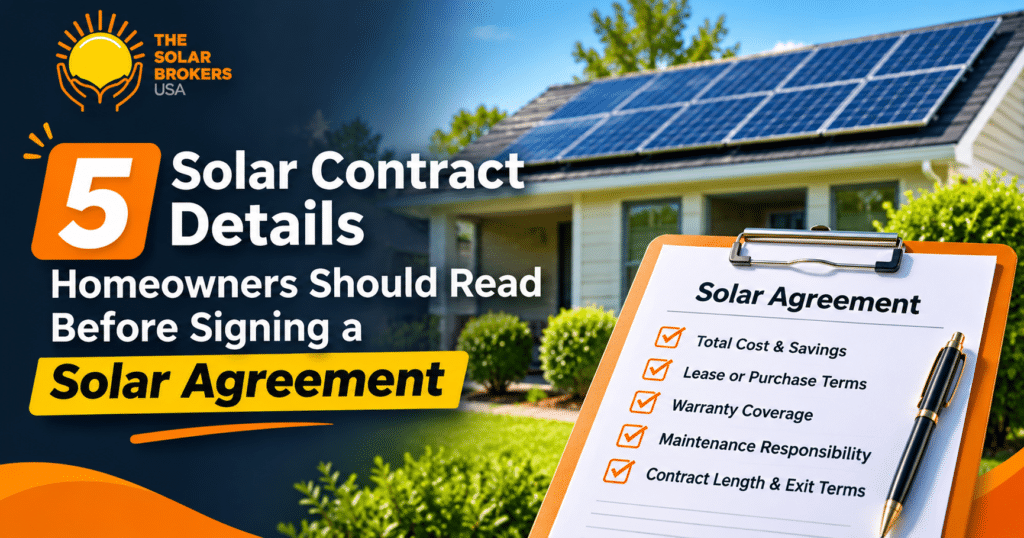
Going solar is a significant investment, and you can be tied into an agreement that will determine how much you pay, what your obligations are, and how much you save for years to come. Homeowners will want to make sure they fully understand all the details of any solar contract details they are considering. This will allow you to avoid any hidden costs, confusion, and bad terms.
Calculate Total Costs of the Contract
To work out how much your renewable energy project or solar installation project will cost in total, add up the price of the equipment, design, permit, labor, connection, finance, and local VAT.
- Loan details: If you opt for a loan, make sure you know what the fixed or variable interest (APR) is, how long it will take to pay back, the monthly payment, and if there are any factors that could affect your payments.
- Lease/PPA: If you’re going for a solar lease or PPA, understand what the payment structure is. Look out for any annual percentage increase, which will be known as an escalator.
- Billing Date and additional costs: Ensure you know when your bills will start. Make sure you are aware if there are any additional costs to pay for upgrading your main panel, any structural changes to your utilities, regular servicing, or disconnection.
System Performance and Energy Calculation
Solar companies will often give you an idea of how much energy your system should produce. Understand the solar contract details and the assumptions that have been made. Ensure that the agreement includes details about expected system outputs, measurement of performance, and what will happen if the system performs significantly below expectations.
Warranty and Maintenance Responsibilities
- Ensure the minimum solar panel Maryland statutory warranties are included within the contract. This should include warranties for the PV modules (minimum 25 years), inverters (minimum 10 years), and workmanship/labor (mandatory 10 years). These warranties should be clearly defined within the Maryland Energy Administration (MEA) Consumer Protection Policy.
- Review the warranty wording. Not all damage and disruptions caused by the equipment will be covered. Be sure to review the wording to ensure you know what isn’t covered at your chosen site.
- The contract should clearly state who will manage and coordinate the regular maintenance. It should also define who will make the warranty claim.
- Ensure the documentation has an up-to-date continuity plan. This should detail the back-up support chain and contact points for the warranty.
Cancellation, Fees, and Other Terms
Check how long you will have to notify them of termination. What are the terms of termination? Are there any early termination fees, and what could cause additional charges?
Check what the terms are for delays to installation, permitting issues, roof works, upgrades to equipment, and changes to the project. If there is anything that isn’t clear, then ask the provider to provide written clarification. Compare the terms with your original sales pitch to ensure you get what was promised.
Final Thoughts
Solar contract details can be complex; therefore, it is very important to understand any small print contained within.The Solar Brokers USA will give you a better understanding of what solar options are available, how much they will cost, how they are paid for, the warranty, and anything else relevant to the contract.
Our professional advice can help you to make sense of any questions you may have regarding the agreement. Contact The Solar Brokers USA now to understand what you are signing to ensure that any decisions made will be suitable for your home, budget, and long-term energy goals.