
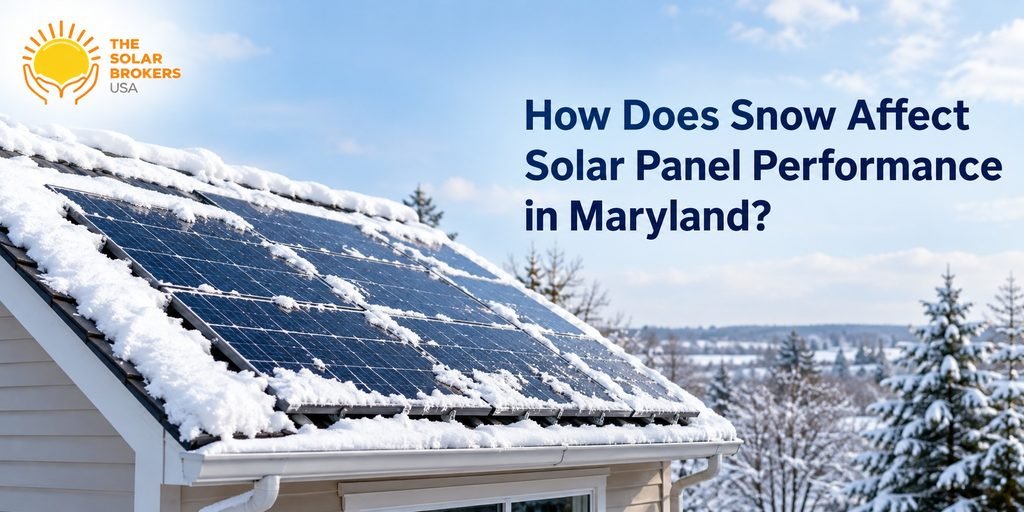
A layer of snow on your roof is never a good thing. Especially when you’re trying to make sure that your solar panels are doing their job. Solar panels rely on the sun’s energy to be of any use to you. And while Maryland’s winters can sometimes be relatively mild, they can also be snowy.
Snowfall isn’t completely consistent across the state or even across systems. The amount of time it takes to melt, the amount of the fall, and your panel’s positioning can be factors. Maryland sees its fair share of winter storms, so many solar panel buyers in the area have the question, Does Snow Affect Solar Panels in Maryland?, and the answer varies depending on the accumulation of the snow and how much the panels are angled.
Does Snow Stop Solar Panels From Working?
Regular snow cannot totally damage your solar panel, however, there are things to keep in mind.. Solar panels require sunlight to produce electricity, not heat. In fact, cold temperatures can help solar panels produce more power. The issue with snow is that it can cover the panels in a thick blanket, blocking any sunlight from reaching the cells.
While a light dusting of snow might not have as much effect, heavy snowfall will quickly shut down any production until it melts or slides off the roof. That means a cloudy, snowy day doesn’t necessarily mean a day of zero production for your solar panels.
What Happens When Snow Lands on Solar Panels?
Most rooftop-mounted solar panels are angled to allow snow to slide off as it melts. However, solar panels may also absorb heat from the sun, helping melt snow. Snowfall won’t necessarily vanish right away, either.
How long snow stays on a solar panel, and the power output depends on multiple things:
- How much snowfall occurs
- The panel’s angle
- Air temperatures
- How much sunlight the panels receive
- The type of snow
- How long the snow covers the solar array.
The panels’ energy output will depend on whether it was a fluffy day or a wet, heavy dump of snow that lasts for days. For solar panels Maryland homeowners install, the winter impact will depend partly on the property’s roof design and the system’s orientation. A steep, unobstructed array may shed snow more easily than a low-pitched or shaded installation.
Do You Need Solar Panel Snow Removal?
In most cases, it shouldn’t be a problem. You shouldn’t attempt to remove the snow yourself. It can be dangerous to try to climb on the roof, and a shovel or other tool can scratch or otherwise damage the panels—the Department of Energy warns that manual removal can damage the panels if done improperly, for instance, by stepping on them.
If removal is necessary, you should always follow the manufacturer’s guidelines. Avoid standing on the panels, and do not use a hard object like a shovel to scrape the glass. You may want to consider contacting a professional Maryland solar panel installation company to remove it for you if the roof is too risky to attempt on your own. Letting it melt or sliding down on its own is often the safest option.
Can Heavy Snow Damage Solar Panels?
Heavy snow is different than just regular old snowfall. Massive accumulations and ice can weigh down on the panels and their support structure. The Department of Energy warns that extreme snow and ice can add stress to module frames, racking, and other equipment.
Understanding how snow affects solar panels in Maryland also means understanding how your system was designed to handle the forces of Mother Nature. Your contractor should be taking into account these things when installing a solar panel:
- The amount of snow load in Maryland
- Panels’ load rating
- Racking strength
- Roof structure
- When determining how to mount them
- Tilt and spacing
Maryland’s consumer solar guide also recommends being mindful of wind, ice, and snow loading when selecting a racking system. Ground-mounted solar systems also need to account for snow accumulation beneath the panels. Maryland guidance recommends considering average snowfall when determining panel height so sliding snow does not block the lower panels.
Is Solar Still Worth It for Maryland Homeowners?
Yes. A Maryland winter doesn’t make it non-viable. It’s still got all the commercial advantages. Just need to judge things as a whole, not just a small number of snowy days.
Before installing solar, look at:
- Roof orientation
- Tree canopy and shades of buildings
- Expected annual electricity production
- Snow, frost, and winter conditions
- Condition of the roof
- Panel and racking specifications.
A properly designed system can continue to generate electricity throughout the year while also accounting for seasonal weather. For homeowners researching solar installation Maryland options, choosing an experienced installer is especially important. The design should account for your specific roof, local conditions, and expected energy use rather than relying on a one-size-fits-all system.
The Bottom Line
Snow can temporarily reduce solar production, but it does not mean your system stops being useful during winter. Does snow affect solar panels in Maryland? Mainly by blocking sunlight while snow remains on the panels. Once the snow melts or slides away, production can resume.
With appropriate panel placement, mounting, snow-load considerations, and roof assessment, Maryland solar panels can continue producing energy throughout the year. If you’re considering solar for your Maryland property, Solar Brokers USA can be your go-to for evaluating your property and understanding which solar setup may fit your needs.